Learn
Strategy articles and research notes — how the game actually plays, measured on real data.
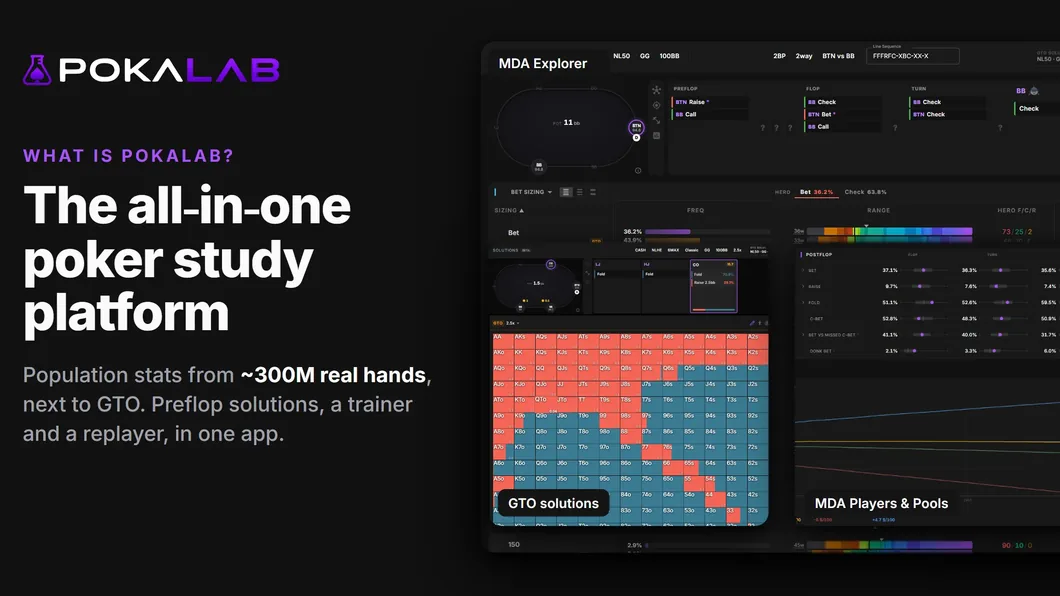
PokalabWhat Is Pokalab? The All-in-One Poker Study PlatformPokalab shows how real players play every spot, measured on ~300M real hands, next to GTO — with preflop solutions, a trainer, a hand replayer and free tools in the same app, and soon a Leak Finder and exploitative solutions.PokalabOct 5, 2026
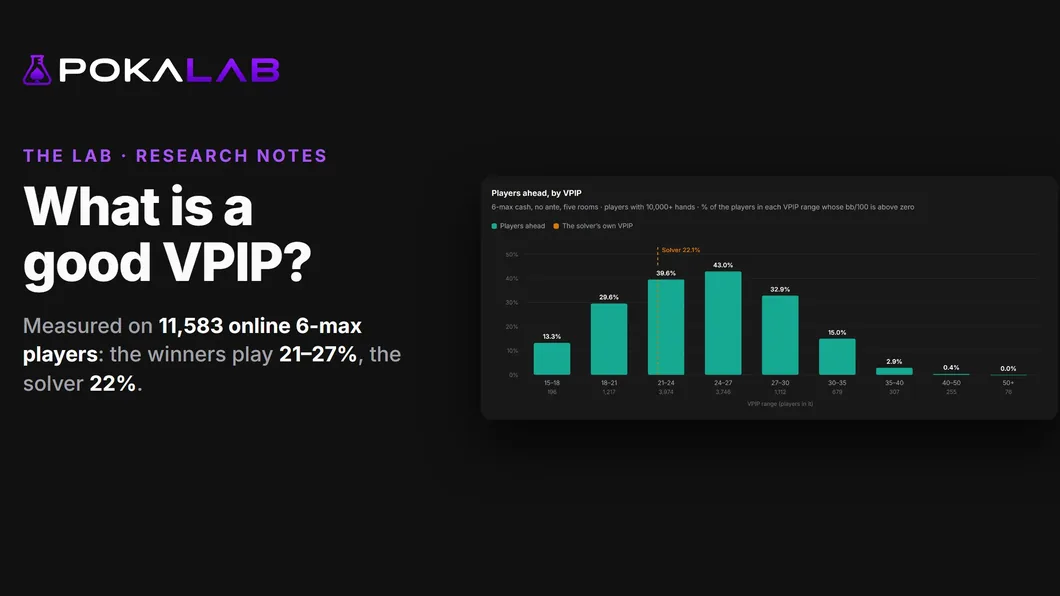
The LabWhat Is a Good VPIP? What Winning Players Actually PlayGuides put a good 6-max VPIP anywhere from 20% to 30%. Measured on 11,583 online players with 10,000+ hands in five rooms: the winners play 21–27% (median 24%), the solver 22%, and above 35% almost nobody wins.Pokalab ResearchOct 4, 2026
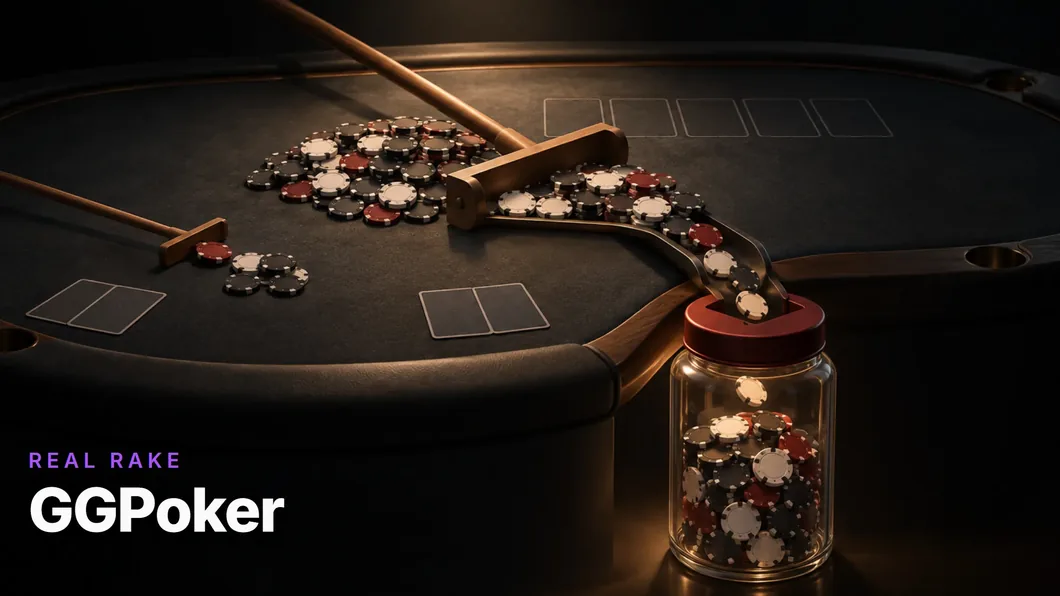
The LabWhat GGPoker’s Bad Beat Jackpot Fee and Preflop Rake Really Cost YouGGPoker takes 1 big blind for its jackpot from pots of 30bb or more and rakes 3-bet pots that end preflop. Measured on real 6-max hands from NL25 to NL1000: about one hand in ten pays the fee, and the two charges cost a regular 2.1 to 2.6 bb/100.Pokalab ResearchOct 4, 2026

The LabPlayer Types, MeasuredHow many kinds of poker player are there? None by nature, six useful ones by measurement — and the stat that finds the fish is not the stat that finds the winners.Pokalab ResearchAug 22, 2026
The LabWon-When-VPIPOf the pots you choose to play, how many do you actually win? Winrate climbs in lockstep with this one number — and the best regs in the pool own it.Pokalab ResearchAug 21, 2026